Blog
OK, so we’ve fallen at the first hurdle. Our aim – in our blog of Jan 31st 2022 – to update our progress on the Race to Zero every six months has been missed by six months. But luckily, those six months haven’t been without action from the wider book industry. The IPG (Independent Publishers’ Guild), of which we are members, have made some significant strides in identifying the key areas where book publishing needs to reduce its environmental impact. And they’ve brought together various industry bodies to work on really practical solutions.
1. IPG Book Journeys Project
This project researched the impact of six case studies for the ‘journey of a book’ from printer to consumer. This is the part of the publishing process the publisher could, in theory, influence more directly and where there is often waste.
There were two significant findings for us:
– shipping from China emitted the most Green House Gas (GHG)
– shrink-wrapping special packs accounted for the majority of the packaging waste.
(It’s well worth reading the full Book Journeys Report as it’s very clear and full of great detail.)
What can we do about this?
2. Shipping from China
We continue to print in China (as explained in the previous blog) despite the logjams and increases in cost of post-pandemic shipping and the geopolitical uncertainty. As we are a tiny business, we’ll have to rely on the global transportation and logistics industry to work on reducing their emissions. But of course we will add our voice to any pressure applied by the bigger publishing industry fish.
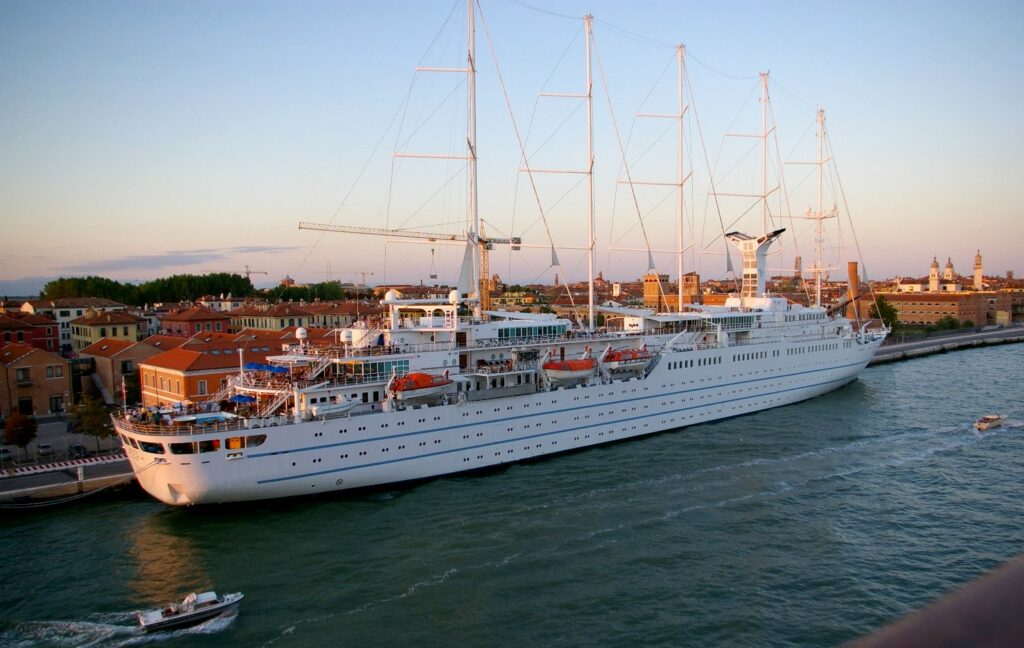
Interestingly, while pottering around the Mediterranean this year – lucky me to be semi-retired – I’ve spotted several ‘hybrid’ cargo ships and ferries also some exciting-looking cruise ships with masts and sails. The Guardian also ran a ‘long read’ on a French entrepreneur who tried to develop a sailing cargo ship, not entirely successfully despite a huge amount of money and effort.
Our plan to print any books that are exclusively for the UK market in Europe has expanded from Malta to Lithuania but we haven’t yet identified any suitable UK printers.
3. Shrink-wrapping
For this we are often dependent on our customers. We are not being asked by our UK customers for shrink-wrapping at the moment and hopefully it will stay this way. If we do get asked for shrink-wrap, we always challenge the customer on the purpose of the shrink-wrap in case there’s a way that we can solve that problem without plastic, e.g. paper belly bands that hold the packs together in the cartons.
The most common use of shrink-wrap is to protect the books as they move through the supply chain. The only plastic packaging we do still get asked for is ziplock bags, which are reusable, in a sense, but we would still like to eliminate.
Books with straps or flaps or cut-outs might need shrink-wrap to protect them. So we need to try and create books with straightforward formats that stand out due to their content and so avoid having to use plastic either to wrap the books or produce them (sound boards, foam backing etc.).
4. The next step
Following their research, the IPG have set five targets to push the industry in the right direction and as you can see above, we’re also working on these:
1 Efficient transportation
2 Greener logistics
3 Better packaging
4 Localise printing
5 Reach net zero…by 2050
And they have developed a Zero Carbon Toolkit to help publishers take steps towards these five targets. Our publisher, Sam, helped with the toolkit development and I’m about to give it a try. So more on these in the next update…
5. Antarctica
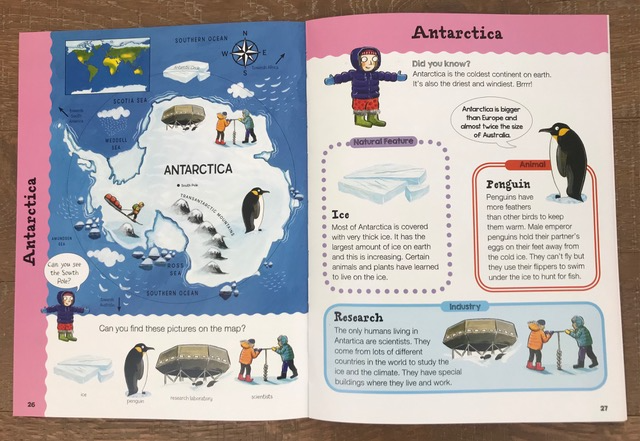
A last note on sustainable shipping. My daughter, Lucy, has just gone to Antarctica to (wo)man the Port Lockroy UK Antarctic Heritage site for the summer season. She was transported there on a state of the art Norwegian hybrid cruise ship, the Roald Amundsen. I was really pleased that our My First Picture Atlas includes a lovely spread about Antarctica, complete with a penguin.